


ZeeMee
4.5372.00 Reviews
App Specs
- Version
- 6.0.3
- Updated On
- License
- Free
- Downloads
- 100,000+
- Developer
- ZeeMee
- Categories
- Social
- Platform
- Android
Screenshots
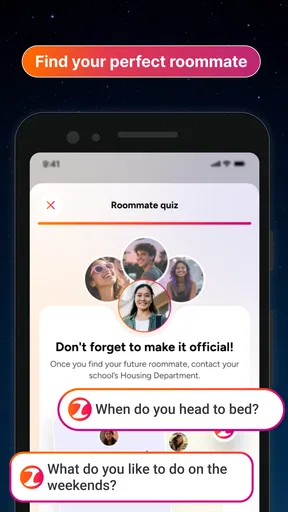

 Analysis by AppCompare
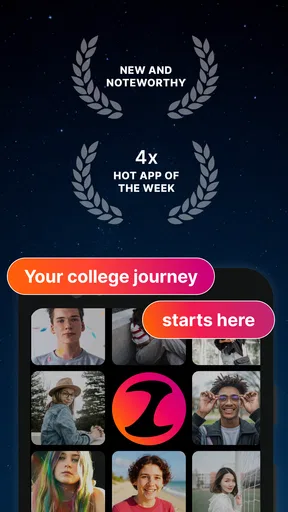
Choosing a college can feel strangely quiet before it becomes overwhelming. You may have questions about campus life, roommates, clubs, classes, or simply whether people at a particular school seem approachable, yet the official information often sounds polished and distant. ZeeMee is built around that gap. I found it most useful as a social app for college where prospective and current students can communicate in a more informal rhythm than they would through admissions pages or general social networks.
That focus gives it a clear purpose. It is not trying to replace every messaging service or become a broad entertainment feed. Instead, its value comes from helping students move from isolated research toward conversations with people connected to college life. The developer is ZeeMee, and the app is free, which makes trying it fairly easy. It is rated for Teen users, so younger students exploring their next step can also encounter it as part of their college search.
My overall impression is positive, but conditional. ZeeMee works best when you want context and conversation, not just announcements. It can make an unfamiliar college feel more human, especially when you use it with a specific question or decision in mind. At the same time, a social environment can create noise, uneven replies, and pressure to stay available. The app is helpful when it supports your research; it is less helpful when it becomes another stream demanding constant attention.
Why a college-focused social space can matter
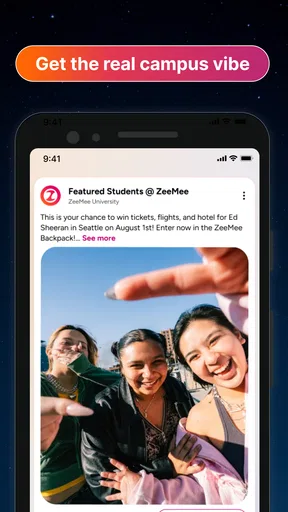
The communication need here is different from ordinary social networking. On a general platform, college-related posts are mixed with family updates, entertainment, news, and personal interests. A school’s official website has the opposite problem: it may explain programs and policies clearly, but it rarely shows how students actually talk to one another. ZeeMee sits between those two experiences.
In my experience, that middle ground changes the questions people are willing to ask. Instead of searching only for formal answers, a prospective student can look for the everyday details that influence comfort: how students describe their first weeks, what kind of conversations happen around a school, or whether it seems possible to meet people before arriving. These impressions should not replace official information, but they can make the decision process less abstract.
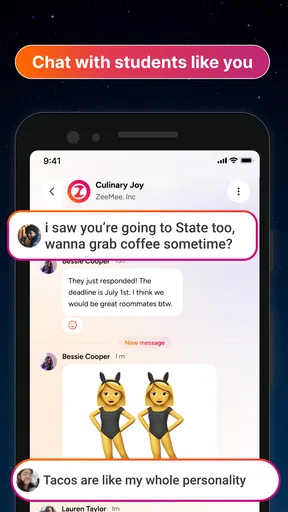
The app also gives communication a shared setting. That matters for students who do not already know anyone at a college. A private message on a broad platform can feel awkward because there is no clear reason to start one. A college-centered environment supplies a natural context, making it easier to approach conversations around enrollment, interests, campus routines, or the transition from secondary school.
I would especially recommend trying it during a comparison period. Rather than opening it whenever you are bored, choose two or three questions that could genuinely affect your decision. For example, you might want to understand how easy it is to find people with similar interests, how students discuss the move away from home, or how active the community feels at the moment. This turns browsing into a small research workflow instead of an unfocused scroll.
Worth Reading Before You Choose

EA SPORTS FC Mobile 26 Is a Bigger Football Game, but It Takes Time

Flipboard Shows What News Apps Must Do Beyond the Feed

Switching to Android Auto Means Rethinking Your Driving Routine

Google Calendar Makes a Crowded Week Easier to Manage

Ludo King Makes the Most of the Minutes Between Plans

Baby Panda World Brings Quick Play to Modern Phones, but Its Game Library Feels Busy
There is an important trade-off. A social app can show atmosphere, but atmosphere is not the same as a complete picture. The most visible conversations may come from the most active users, not from everyone at the college. I would use what I see as a starting point, then verify academic, financial, housing, and administrative details through official channels. That combination gives me both human context and dependable reference material.
Conversation feels more useful when it has a purpose
The strongest part of the experience is the way a focused question can open a broader conversation. If I enter with a clear reason for being there, I am less likely to treat every post as equally important. A question about meeting people, for instance, can lead to a better understanding of the social climate than passively watching a sequence of unrelated updates.
This is where ZeeMee differs from a traditional college website. The website is better for exact requirements and formal instructions. ZeeMee is better for the emotional and social layer around those facts. It can help answer, “What might this experience feel like?” It cannot responsibly answer every question with the same authority, and I would not expect it to.
Compared with a general social network, the narrower subject is an advantage. The context is already present, so conversations do not need as much explanation. Compared with a private group chat, the app may be more useful at the beginning, when you have not yet built a circle of contacts. A private chat becomes stronger once you know people well; a college-focused community can be more approachable during the discovery stage.
One practical habit improved my use of it: I separated observation from participation. First, I spent a short period noticing which discussions were genuinely informative. Then I joined only the conversations connected to my own concerns. This reduced the feeling that I needed to react to everything and made each interaction more intentional.
The rhythm of replies can shape expectations
Social communication is not only about what is said; it is also about when people expect an answer. In a college-oriented community, some users may be asking urgent questions about an upcoming decision while others are casually meeting future classmates. That creates different speeds in the same space.
I found it healthier to treat conversations as asynchronous unless a discussion clearly requires immediate coordination. A delayed reply does not automatically mean disinterest, just as a fast exchange does not necessarily signal a lasting connection. This mindset prevents the app from turning every unanswered message into a personal judgment.
For students preparing to move, the rhythm can be reassuring. A few small exchanges over time may feel more natural than trying to form friendships in one intense burst. You can return to a conversation when you have something useful to add, rather than feeling forced to maintain a constant performance.
There is also a weakness here. If the community around a particular topic is quiet, the app may not provide the momentum you hoped for. A social product depends on participation, and a useful idea can feel less useful when replies arrive slowly or remain brief. I would not judge an entire college solely by the activity level I encounter in one moment.
Attention is the hidden cost of a social app
The main attention risk is not complicated: a tool intended to reduce uncertainty can create another place to check. College decisions already involve forms, messages, research, deadlines, and emotional pressure. Adding a social feed can make the process feel more connected, but it can also scatter concentration across many small interactions.
I recommend giving the app a job before opening it. If I am checking a discussion about a particular concern, I can leave once I have gathered enough context. If I open it without a question, I am more likely to drift through conversations that do not improve my decision. That simple distinction makes the experience feel calmer and more productive.
Notifications and response habits deserve personal boundaries. Even when an app is free, attention is still a cost. I would avoid treating every conversation as an obligation and would not use the platform as my only source of social contact. The goal is to make college exploration more human, not to spend the entire evening monitoring a digital version of it.
A realistic scenario shows the difference. Imagine a student comparing two colleges after school. They use ZeeMee to read how students discuss meeting people and adjusting to campus life, write down a few observations, and then return to official pages for program and cost information. That is a productive session. The less useful version is opening the app late at night, jumping among conversations, and finishing with more anxiety but no clearer decision.
For parents or guardians, the Teen rating is worth noticing as part of the app’s intended audience. I would encourage a conversation about what the student hopes to learn, what personal details should remain private, and how to handle uncomfortable interactions. That is more useful than assuming a social app is automatically safe or automatically harmful.
Boundaries make the social side easier to manage
Good boundaries are especially important when students are discussing a major life transition. I would avoid sharing information that reveals too much about where I live, when I will be away, or how to contact me outside the app. I would also remember that a friendly conversation is not the same as a verified relationship.
The most practical boundary is deciding what belongs in a public conversation and what should remain private. General questions about student life can help many readers. Personal details, emotional struggles, or identifying information deserve more caution. If a discussion begins to feel pressuring, intrusive, or uncomfortable, I would step back rather than trying to preserve the interaction.
Another useful boundary is emotional. College communities can make it seem as though everyone else has already found friends, chosen a school, or figured out the next stage. That impression may be shaped by who posts most often. I would use the app to discover possibilities, not to measure my own progress against other people’s most visible moments.
This is also where ZeeMee may not be the right choice. Students who dislike social discovery, prefer direct official communication, or feel drained by group conversation may get more value from admissions pages, scheduled information sessions, or a small number of trusted contacts. Likewise, someone looking for a broad entertainment network rather than college-centered communication should choose a different kind of app.
The app’s current version is 6.0.2 and it supports devices running Android 8.0 or later. That makes checking compatibility straightforward before installing. I would still keep expectations realistic: a supported device does not guarantee that every community will feel equally active or that every interaction will answer a personal question.
Who benefits most from using it
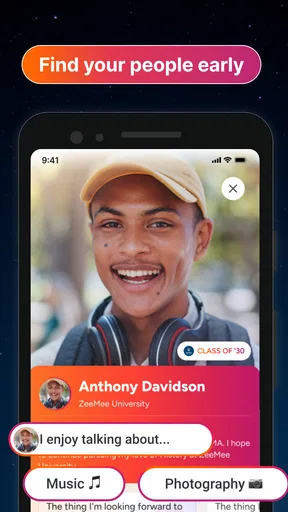
ZeeMee is a strong fit for prospective students who want to understand the social texture around college life. It is also useful for students who have accepted an offer and want to begin forming connections before arrival. The app can serve as a low-pressure bridge between “I know the school by name” and “I have a better sense of the people and conversations around it.”
It is less suitable for someone who needs authoritative answers about admissions, financial aid, housing contracts, course requirements, or other formal matters. Those questions should go to the institution or the relevant official source. The app’s strength is lived context, not administrative certainty.
I also would not recommend using it as a replacement for real-world preparation. A few online conversations cannot reveal every aspect of a campus, and they should not determine a major decision by themselves. The best use is complementary: gather impressions, identify questions, meet people cautiously, and then confirm the important facts elsewhere.
The audience response suggests that this focused approach resonates. ZeeMee has an average rating of 4.5 from around 2.6 thousand ratings, with more than 370 written reviews and over 100 thousand installs. Those figures indicate a meaningful user base and generally favorable reception, while still leaving room for the experience to vary depending on how active the relevant conversations are.
My verdict on the communication experience
After using it as a college-centered social tool, I see ZeeMee as most valuable when it changes the quality of a question, not simply the amount of time spent online. It can turn a vague worry into a conversation, help a student feel less alone during the college search, and offer social clues that formal pages cannot provide.
Its limitations are tied to the same design choice that makes it appealing. Because it is social, the experience depends on participation, timing, and personal comfort. Some discussions may be useful while others are distracting. Some replies may clarify a concern while others may reflect only one person’s experience. I appreciate the app more when I remember that distinction.
The free price removes a major barrier to trying it, and the Teen content rating makes its intended audience clear. With its focus on college communication and its developer, ZeeMee, the product has a specific identity rather than feeling like a generic social feed. I would install it for a focused period during college research or preparation, establish sensible privacy and attention limits, and keep official sources beside it.
My final recommendation is simple: use ZeeMee as a conversation doorway, not as your entire college guide. If you want human context and are willing to manage the attention and boundary costs of social communication, it can be genuinely helpful. If you want only verified instructions or dislike online interaction, another resource will serve you better. For the right student, its real contribution is not endless activity; it is making the next step feel a little less unfamiliar.
Pros
- Helps students discover colleges and connect with potential classmates.
- Community chats make it easier to ask questions before enrollment.
- Profiles can showcase interests beyond grades and test scores.
- Useful for finding campus events
- groups
- and student resources.
- Free to download and generally easy to navigate.
Cons
- Some communities may feel inactive outside peak admissions periods.
- Requires personal details
- so privacy settings deserve careful review.
- Notifications can become distracting when several chats are active.
- Information quality depends on posts from students and community members.
- Best suited to college-bound users
- limiting its appeal for others.
FAQs for ZeeMee
What is ZeeMee and who is it designed for?
ZeeMee is a social networking app created mainly for students exploring colleges and preparing for campus life. It allows users to discover schools, connect with current students and other applicants, join college-specific communities, and share parts of their experience. The app is especially useful during the college search process, although the available communities and features may vary depending on the institution and the time of year.
Can I use ZeeMee to communicate directly with colleges and current students?
ZeeMee may provide access to college communities, student ambassadors, admissions-related content, live events, and conversations with other applicants. However, the level of official college participation differs from one school to another. Some communities may be actively moderated or supported by representatives, while others are driven mostly by students. Users should always verify important admissions, financial aid, housing, and deadline information through the college’s official website.
Is ZeeMee safe for teenagers and young students?
ZeeMee includes features intended to support student communities, but users should still apply the same safety precautions they would use on any social platform. Avoid sharing sensitive information such as your home address, passwords, financial details, or private application documents. Review privacy settings, report suspicious behavior, and be cautious when communicating with people you do not know personally. Parents and younger users should also review the app’s age requirements and privacy policy.
Does ZeeMee cost money to download or use?
The basic ZeeMee experience is generally available without an upfront download charge, allowing users to create a profile, explore participating colleges, and interact with relevant communities. Nevertheless, app features, events, or optional services can change over time, and availability may depend on the user’s location or the participating institution. Before downloading, check the current Google Play or App Store listing for in-app purchase details, subscription information, and any updated terms.
What information does ZeeMee require, and can I control my profile visibility?
To create an account, ZeeMee may request information such as your name, email address, school interests, graduation details, or other profile data used to personalize college-related content. Some features may also involve profile photos, posts, messages, or event participation. Because privacy controls can change with app updates, review the account and notification settings after registration. Read the privacy policy carefully and only provide information you are comfortable sharing within a student-focused social environment.


